Monsters
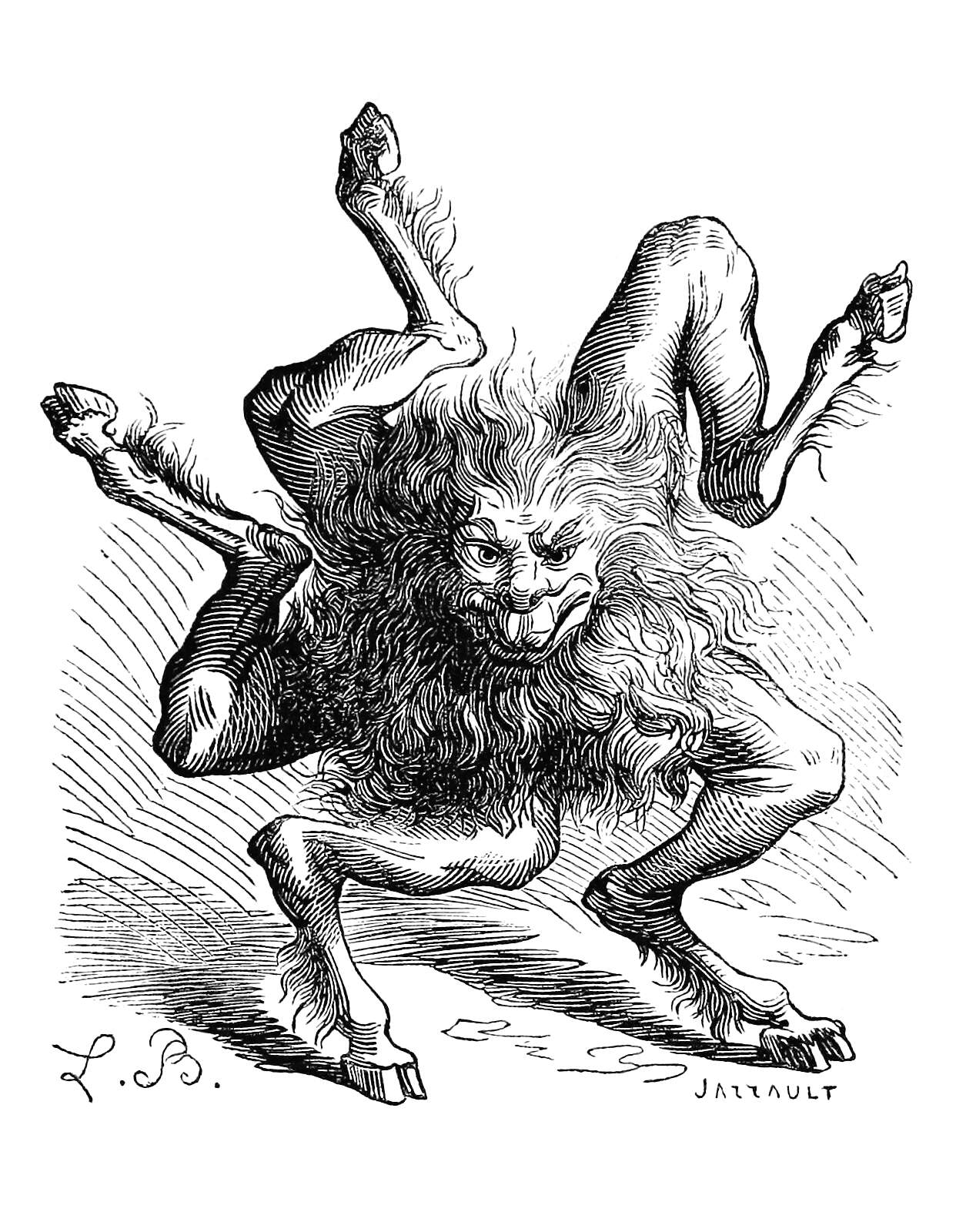 The loathsome buer, a demon of such ignominy that I shall not say anything more about it here. Research at your own peril.
Where Monsters?
- Hilander's Bestiary: The Woods
- ZLDA Monsters
- Salty's Bestiary
- Primeumaton's Monsters 1-2 HD, 3-4 HD
- Goblin Punch Monsters
- The OSE SRD
Why Monsters?
Monsters can (and will) kill you. They are the purest essence of a challenge: a primal foe who guards the path to victory. But unlike pleasant fairy-stories we tell children, in an elf-game there is a very real possibility of dying to the monster. It must be approached carefully, snuck around, or run from.
If we believe that games are about making interesting choices, then good monsters are also about making interesting choices. More than a bundle of numbers, monsters are a problem that can be engaged with in a thousand ways.
Running Monsters
The OSR has two magnificent tools that make running monsters efficient and interesting: The Reaction Roll and the Morale Check.
Reaction Rolls should never be skipped. Even a hate-filled demon of hell with no desire but to rend human flesh should roll a reaction to the party. This doesn't just tell you what the monster thinks of the party, it tells you what kind of situation they're in.
| 2d6 | Reaction |
|---|---|
| 2-3 | Violent, attacks immediately. |
| 4-5 | Defensive, may attack soon! |
| 6-8 | Wary, already busy. |
| 9-10 | Curious, may strike a bargain. |
| 11-12 | Helpful, aids the party - intentionally or not. |
When the Referee rolls a reaction, they now have a question to ask: Why does the demon help the party? What are the orcs busy with? Why does the local priest attack? In answering these questions the Referee weaves scenes far more interesting than one monster after another waiting to kill the party when they arrive.
And make no mistake: the initial reaction can and will morph in response to the party's actions.
Morale Checks cue the Referee on when monsters run away. It sounds like a small thing, but in play it makes monsters feel more alive when they decide to turn-tail and run. If the monster reaches 1/2 health, or 1/2 its allies die, it should be checking Morale.
Monster Crafting
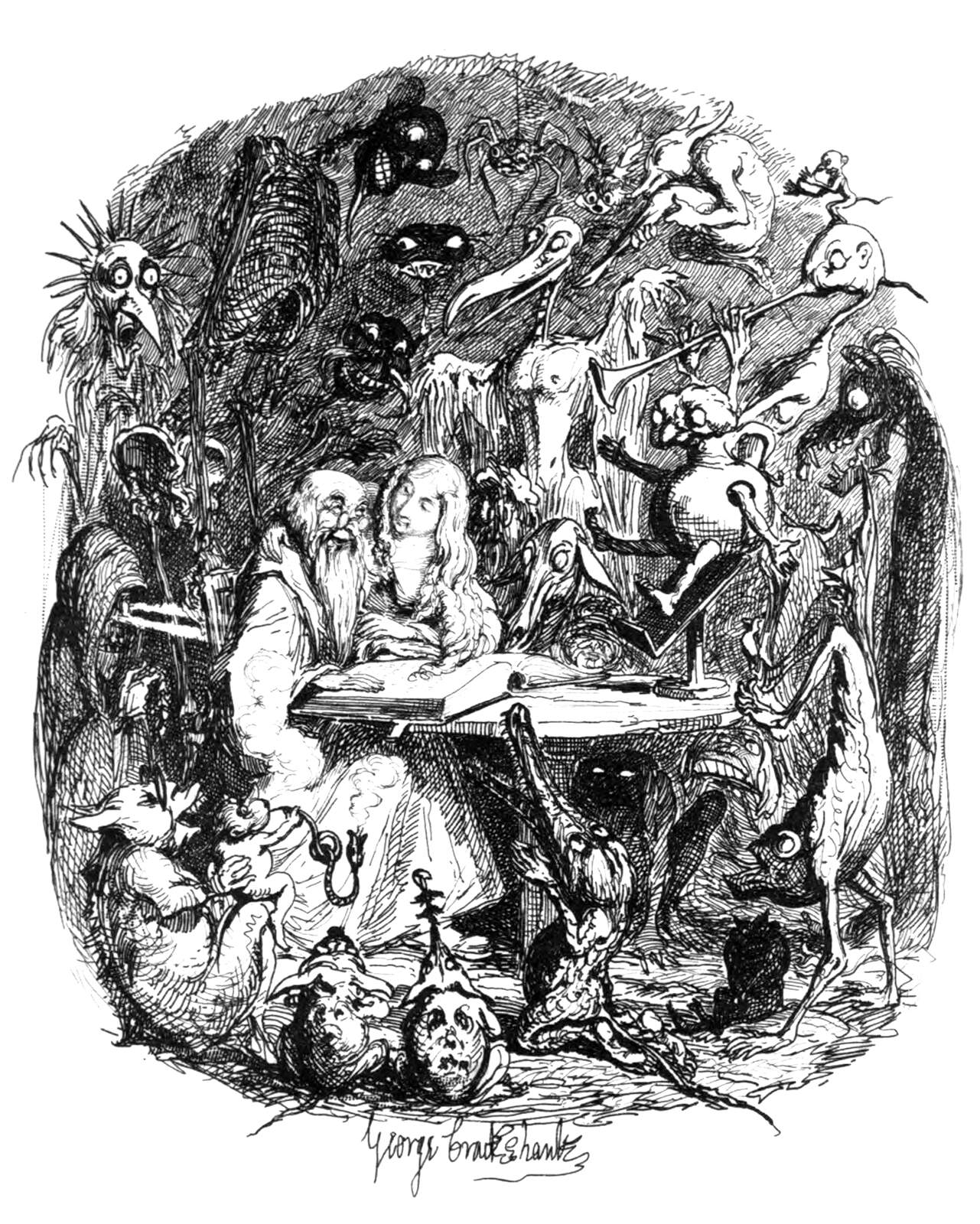
There are a thousand ways to make a monster, and the true way is the one that works for you.
Consider the Monster's...
- Origin: Where did it come from, what does it want?
- Law: What must it do? What must it never do?
- Desire: What does it want, and why?
- Fear: What fills it with dread, why? How does it respond to fear?
- Appearance: What are its most notable features?
- Abilities: What can this monster do that most can't?
The Stat-Line
In general, monsters should be more dangerous than players. There are exceptions to this, but for the most part, tip the scales for the monsters. This means if your adventuring party has 12 total Hit-dice, the average monster encounter on the adventure should probably be 12+.
HD: A rough measure of the monster's level.
HP: Average HP, calculated by HD x4.5. You can also roll HD d8 to set the monster's HP, which is a good and cool thing to do.
Dice: The array of damage dice a monster can roll on an average turn. May be split between multiple attacks. Does not account for special attacks such as breath weapons. Alternative arrays with a similar average can be used.
Hit: Bonus to Hit.
Save: The monster must roll equal-to-or-under this number to pass a save.
| HD | HP | Dice | Hit | Save |
|---|---|---|---|---|
| 1 | 4 | d6 | 1 | 6 |
| 2 | 9 | d8 | 2 | 7 |
| 3 | 13 | 2d4 | 3 | 8 |
| 4 | 18 | 2d6 | 4 | 9 |
| 5 | 22 | 2d8 | 5 | 10 |
| 6 | 27 | 2d8 | 6 | 11 |
| 7 | 31 | 2d8 | 7 | 12 |
| 8 | 36 | 3d6 | 8 | 13 |
| 9 | 40 | 3d6 | 9 | 14 |
| 10 | 45 | 3d6 | 10 | 15 |
| 11 | 49 | 3d8 | 10 | 15 |
| 12 | 54 | 3d8 | 10 | 15 |
| 13 | 58 | 3d8 | 11 | 16 |
| 14 | 63 | 3d8 | 11 | 16 |
| 15 | 67 | 3d8 | 11 | 16 |
| 16 | 72 | 4d8 | 12 | 17 |
| 17 | 76 | 4d8 | 12 | 17 |
| 18 | 81 | 4d8 | 12 | 17 |
| 19 | 85 | 4d8 | 13 | 18 |
| 20 | 90 | 4d8 | 13 | 18 |
Non-HD Stats
- AC: Ranges from 10-18 for most creatures.
- Morale: 7 is normal, 5 is cowardly, 9 is brave.
Special Abilities
If your characters are getting magical weapons and special class abilities, your monsters need interesting abilities as well in order to still be a threat.
- Pack Tactics: +1 to hit per adjacent ally.
- Magic: Give it a couple spells and d4 MD.
- More ideas coming later.
Boss Monsters
Consider:
- Aura: How does the monster's presence affect its immediate area?
- Defense: How will this monster avoid excessive damage? Armor, flight, etc? How could the players bypass this defense?
- Offense: How will this monster engage an entire party at once? Extra attacks? Area of Effect abilities?
- Lair: If this monster gets to choose the battlefield, where would it choose? How does that environment help the monster?
- Wind-up: If this monster is about to use a special attack, what clue will the players have about that attack on the prior turn?
- Weakness: What secret weakness could the players learn about this monster? E.G. a poison or metal it is weak to, a time of day in which its power dwindles, its true name.